Author: admin
Repairing a brick foundation using Stati-Cal technology
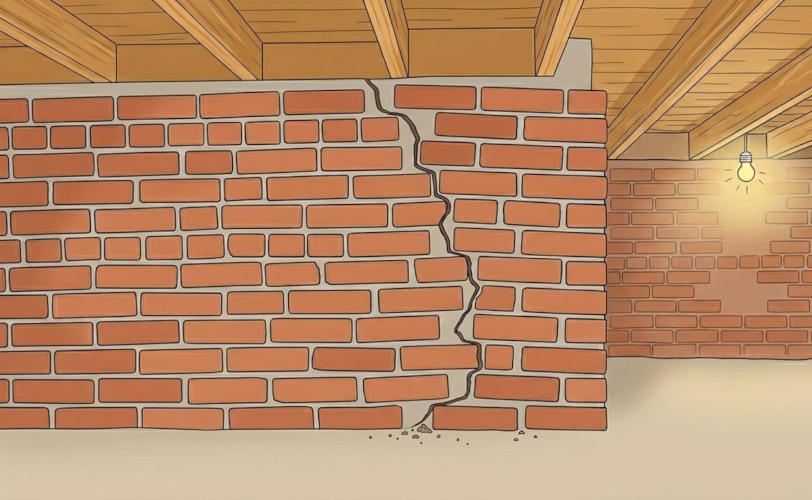
Brick foundations were widely used in the past in the construction of residential houses and small buildings. Such structures could be built entirely of brick or combined with wooden superstructures. Today, construction technologies allow for the creation of more durable, fast-installation foundations capable of supporting heavier structures. As a result, the relevance of brick foundations has significantly declined. At the time when buildings with brick foundations were constructed, waterproofing and geodetic survey technologies were relatively primitive, which is why operational issues often arise today. Over time, such foundations may lose their load-bearing capacity and develop cracks, which can then propagate into the walls of the building.
Causes of cracks in brick foundations
The primary cause of problems is similar for all types of foundations—uneven soil settlement. Over time, the soil may compact, be eroded by groundwater, or change its properties due to seasonal moisture fluctuations. If different parts of the foundation settle unevenly, internal stresses develop, leading to the formation of cracks.
The second cause, more typical for brick and rubble foundations, is the loss of strength of the masonry mortar. Due to moisture exposure and temperature fluctuations over the years, such foundations lose their monolithic integrity and become more vulnerable to deformation under various loads.
The third factor is changing loads. It is important to note that after a building is put into operation, it may undergo modifications—for example, adding extra floors, changing layouts, or constructing extensions. These additional loads were not considered in the original foundation design and often lead to deformation.
Repair of brick foundations using Stati-Cal technologies
This raises an important question: can the building be preserved, given that new construction would involve significantly higher costs?
Yes, it is possible.
The next question is how to repair a brick foundation in the shortest possible time while ensuring reliable results. This can be achieved using a set of Stati-Cal technologies—one of the most modern approaches, combining methods such as Stati-Pile micro-piles and helical reinforcement.
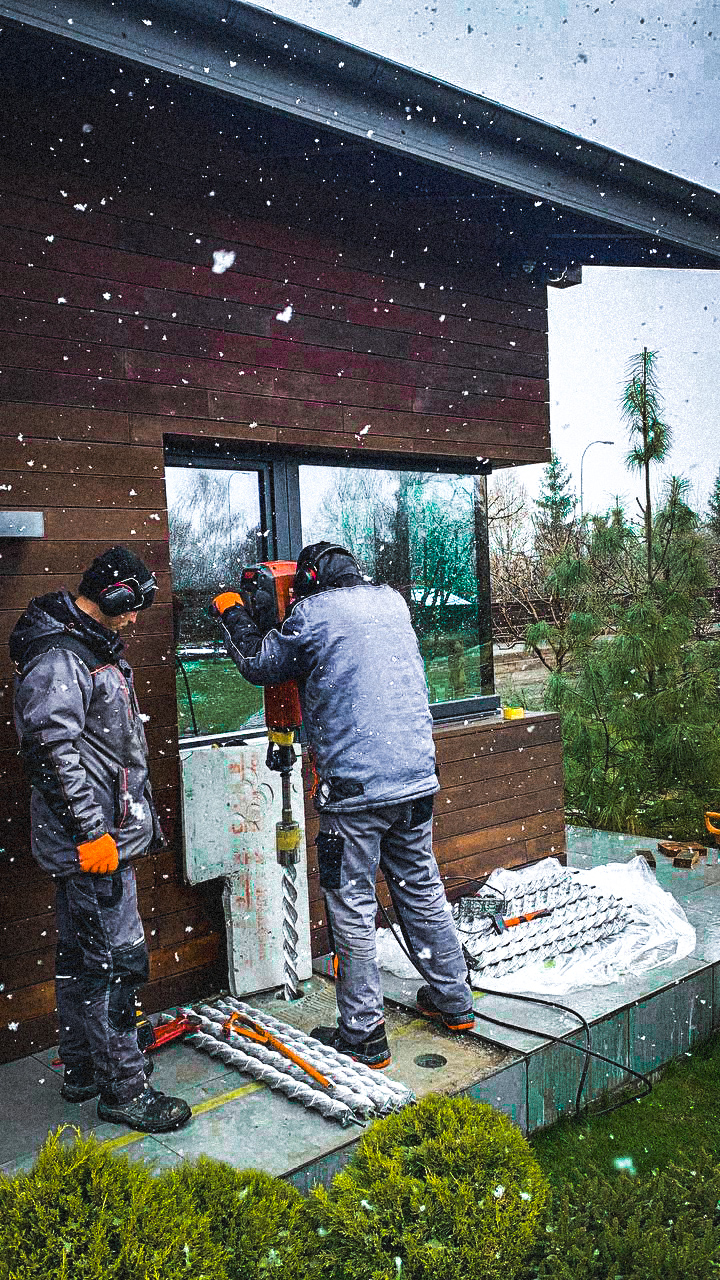
If the damage is caused by subsiding soil, prefabricated steel micro-piles (Stati-Pile) are used. Based on soil investigation results and structural assessment, they can be installed either adjacent to the foundation or directly through it. The pile sections are sequentially extended and driven until the required depth is reached. After installation, the piles are connected to the foundation using steel heads or special support elements. As a result, Stati-Pile transfers the building load to deeper, more stable soil layers, stabilizing the structure.
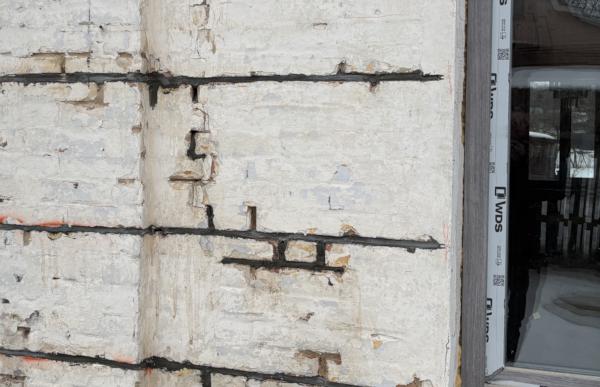
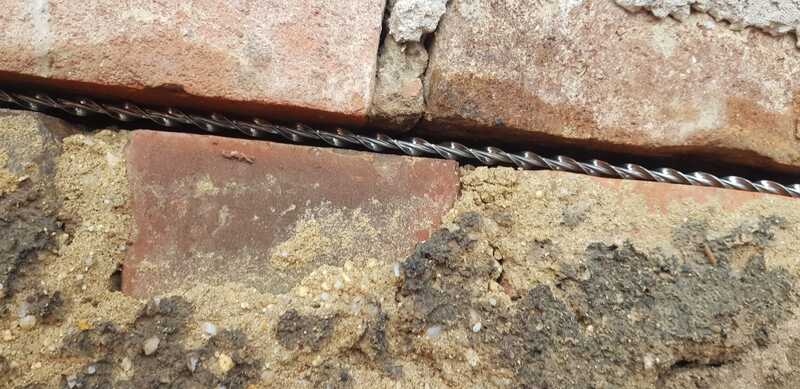
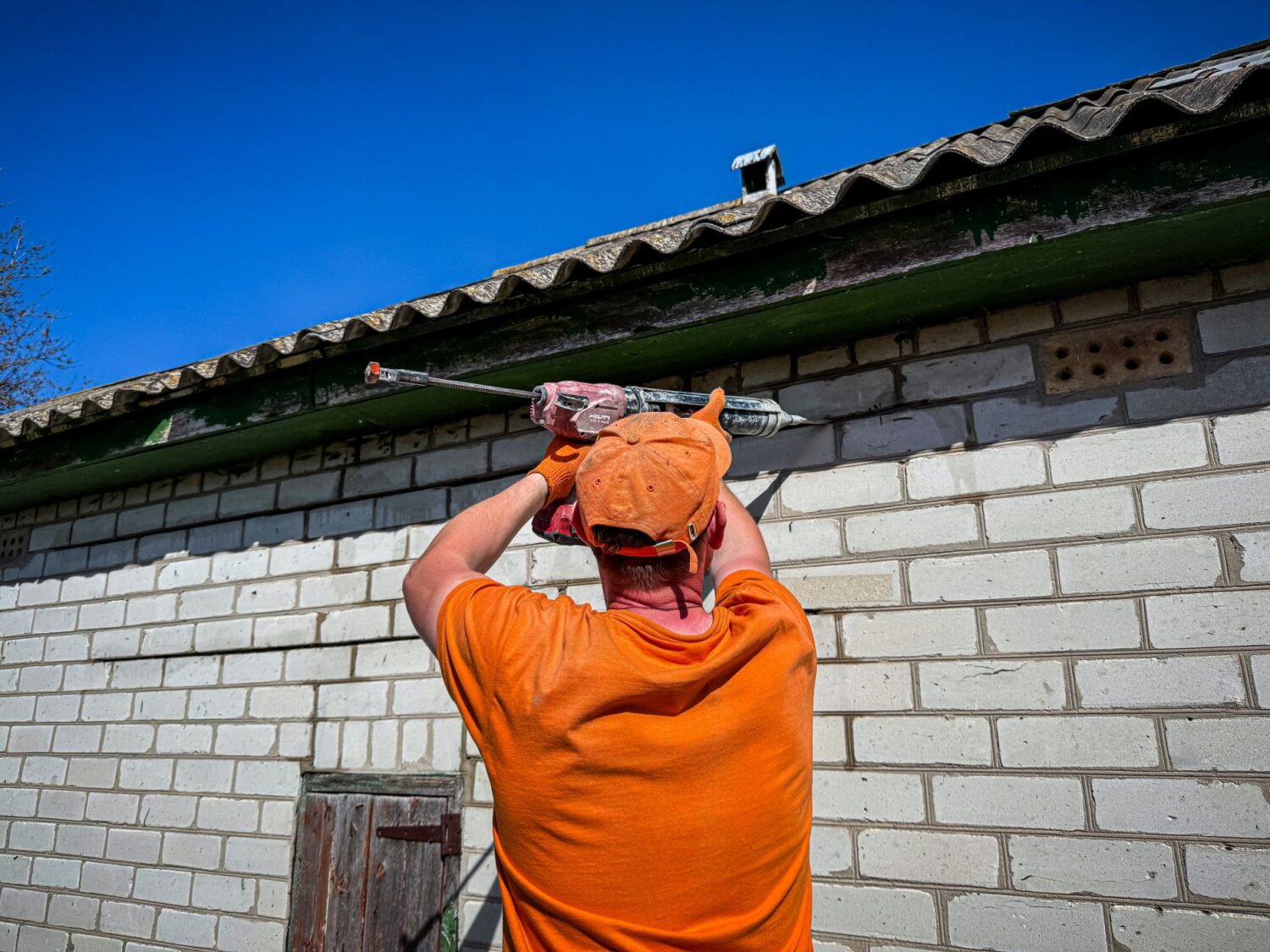
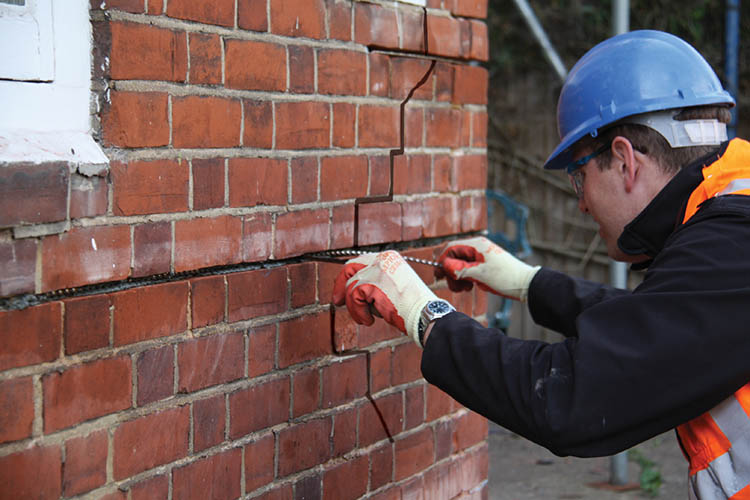
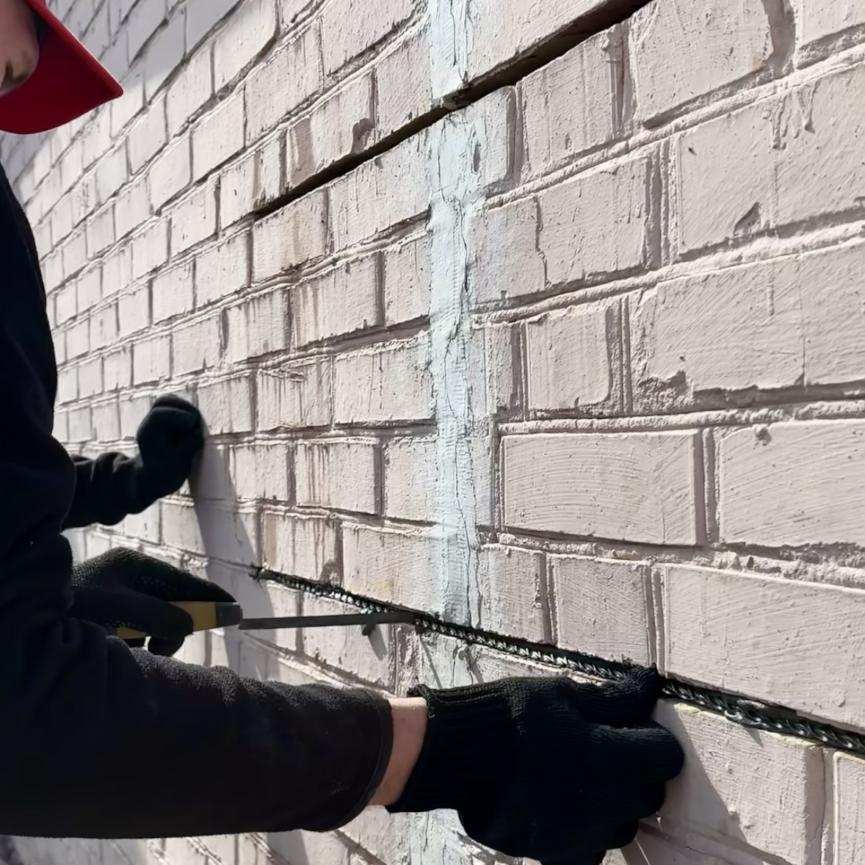
Helical reinforcement is used to restore the strength of brick masonry. In areas with cracks or weakened zones, grooves are cut into horizontal joints. After cleaning, high-strength steel helical bars are installed and fixed with a specialized repair mortar. This solution can also be applied from the inside if access is available from the basement side of the foundation wall.
Helical reinforcement acts as a strengthening element that ties separated sections of masonry together and redistributes stresses. Due to its shape, it bonds effectively with both mortar and brick, forming a durable reinforced connection.
Final result of repair works
This comprehensive solution not only eliminates existing cracks but also addresses several related issues.
Strengthening the masonry prevents further crack propagation and restores the structural rigidity of the building.
The piles eliminate the influence of weak or heterogeneous soils, which is especially important for older buildings constructed without modern geological investigations.
The work is carried out without relocating occupants or dismantling structures.
It is important to understand that the longer foundation and wall cracks are ignored, the more complex the repair process becomes—leading to higher costs and longer timelines. The earlier the issue is addressed, the simpler and faster the solution. A comprehensive approach using Stati-Cal technologies not only eliminates cracks but also significantly improves the durability and reliability of the entire building.
How and what to seal a crack in the corner of a wall
Cracks in the corners of the house are a serious symptom of problems. The reasons may be different, but all of them require immediate measures. Why do we talk about it so categorically?
Corners are nodal points that provide spatial rigidity of the entire structure.
Let’s consider them and classify them. Let’s take the four most common reasons.
Causes of cracks in the corner of the wall
Uneven settlement of the base soils. We have considered the phenomenon itself many times in our articles. Simplifying and abbreviating, we can say that due to the subsidence of the soil under the foundation, at different points to different values, stresses arise in the structures of the foundation and load-bearing walls. The result is stretching forces that “tear” the masonry.
External influences. In wartime conditions, cracks in the walls can form as a result of shelling. To cause damage to a building, it is not necessary to hit it. A jolt caused by a shock wave from a side impact can cause movement in weakened soil. The shock wave itself can have a dynamic effect on the wall. If there were hidden problems before that, the situation will worsen.
Vibrations caused by technogenic factors. The most common cause of vibration loads is the proximity to the railway and subway. Also, the cause may be large-scale construction in the neighborhood and even a busy highway. We explained the principle of the phenomenon in detail in our material “Vibration protection based on construction”. The point is that vibrations not only cause movement in the weakened soil, but also are transmitted through the soil.
Constructive calculations. They can appear over time during operation, due to excess loads on the load-bearing wall (uneven load on the walls), thermal expansion, hidden violations of the integrity of the structures (water leakage, formation of condensate and its freezing in the cavities).
Elimination of cracks in the corners of the walls using steel anchors
It is possible to effectively eliminate the problem with the help of steel anchoring technology, based on engineering experience and Stati-CAL methods. For a better understanding of the seriousness of the problem, we also recommend reading “Types and severity of cracks. Express classification.” Where we previously explained what these or other symptoms signal.
Why exactly the Stati-CAL technology?
Old methods of repairing cracks in the walls of the house, such as “grandfather’s” steel brackets (channels) or concrete “shirts”, have many disadvantages. They are heavy, may require maintenance, require more time to install, and often only temporarily mask the problem, creating new stress points.
The solution offered by Stati-CAL is based on the principle of minimal invasiveness. Instead of massive structures, thin but extremely strong spiral anchors made of stainless steel are used. The alloy selected by the manufacturer provides the necessary combination of stiffness and strength. The special shape and method of installation make the anchor “pre-stressed”, which allows it to transfer loads better than classical anchors. In combination with the use of chemical anchors and a special solution for anchoring places, a long service life of the system is ensured.
The technology of eliminating a crack in the corner with steel anchors
The process of restoring a wall corner using spiral reinforcement systems includes several key stages:
1. Diagnosis of problems
Before “stitching” a crack, it is necessary to make sure that the cause of its appearance has been eliminated or stabilized. If the foundation continues to sag, no anchor will hold the wall forever. First, it may be necessary to strengthen the foundation with piles.
2. Preparation of strobes
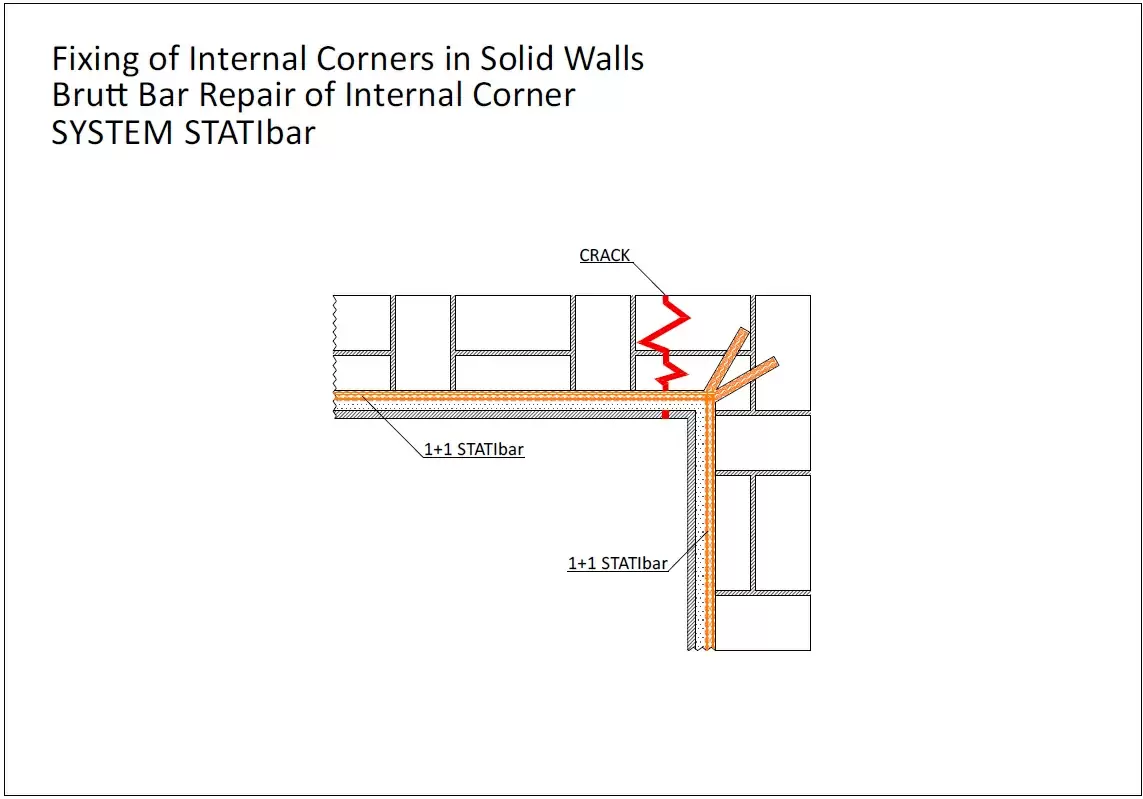
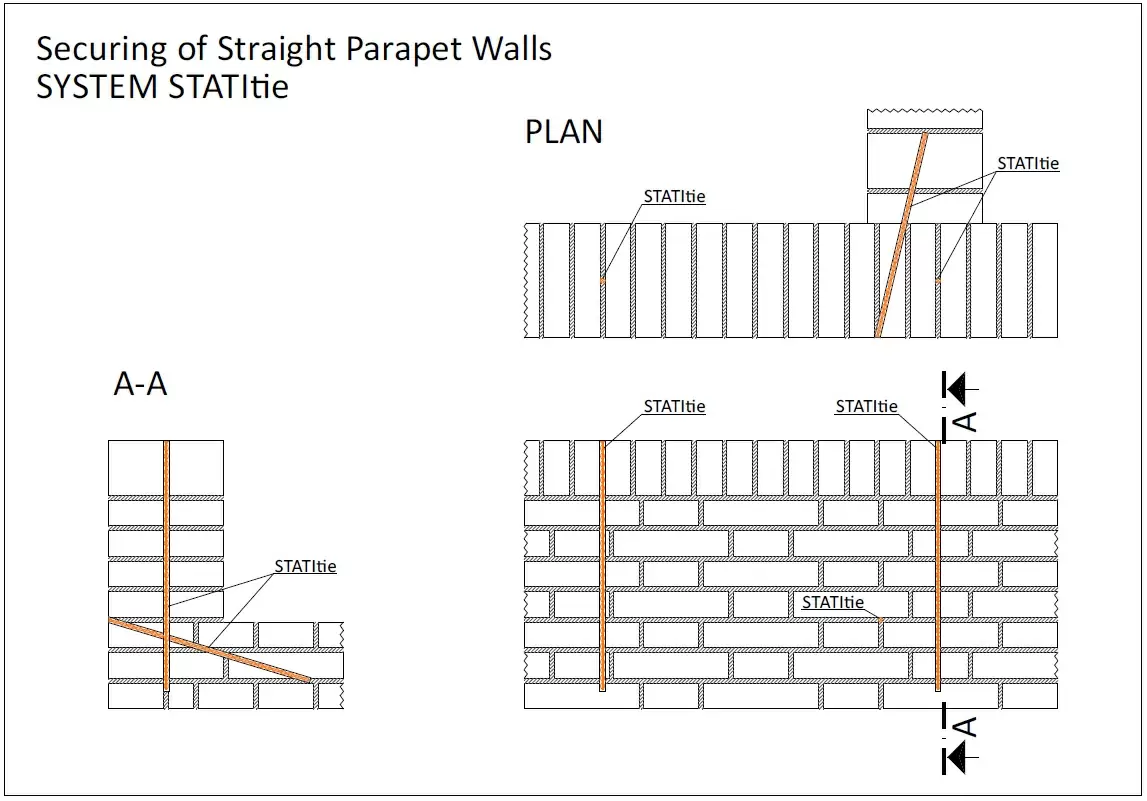
Depending on the nature of the crack, Stati-Bar spiral rods, Stati-Tie spiral anchors or their combination can be used.
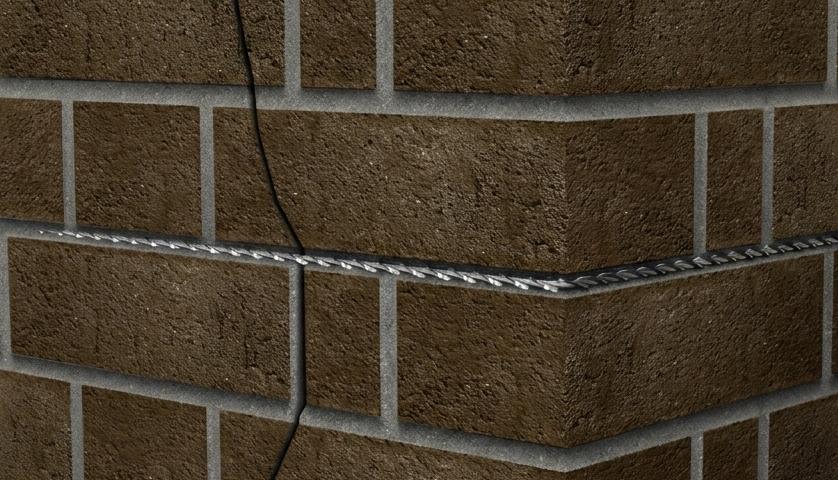
When only spiral rods in the horizontal seams of the masonry, crossing the crack in the corner, are enough, narrow grooves are cut. It is important that the anchor goes around the corner, connecting two perpendicular walls into a single monolith.
What is illustrated in our diagram below:
If it is necessary to fasten side-by-side walls, then specialists choose optimal places for drilling the places where Stati-Tie anchors will be installed. As it is illustrated in the second diagram below:
In more complex situations, the engineer may decide on the need to use both tie rods and anchors.
3. Installation of spiral anchors and rods
A spiral armature is placed and fixed in the cleaned strobes. Chemical anchors can also be used for fastening. The armature works like a powerful spring: it allows the wall to “breathe” during temperature changes, but firmly fixes it when there is a demand for further rupture. After this, the gate with the fittings is laid with a special non-shrinking solution. This prevents corrosion of materials.
Crack injection
The cavity of the cracks itself is filled with a specialized composition, which in the future excludes moisture from entering the wall.
Advantages of the method
- Load distribution. Anchors distribute tensile forces over a large area of masonry, preventing the appearance of new cracks next to old ones.
- Durability The use of stainless steel guarantees that the reinforcement system will not rot inside the wall after 10 years.
- Preservation of aesthetics. This is critically important for historic buildings and private cottages with expensive facade decoration.
- Speed Works are carried out without evicting tenants and using heavy machinery.
Conclusion
A crack in the corner of the wall is not a sentence for the house if you approach the problem from a scientific point of view. The use of steel spiral anchors allows not just to “seal” the crack, but to restore the structural integrity of the building. Remember that effective repair always begins with a professional technical inspection: only by understanding the cause of the building’s illness, you can choose the right “medicine”.