Repairing a brick foundation using Stati-Cal technology
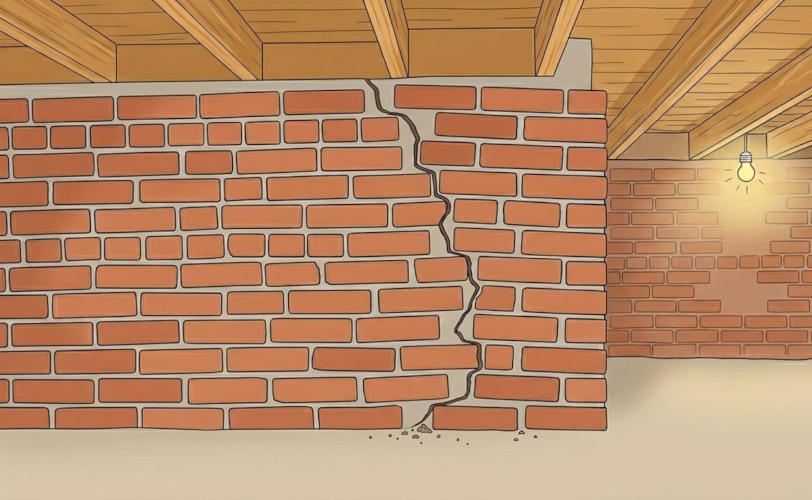
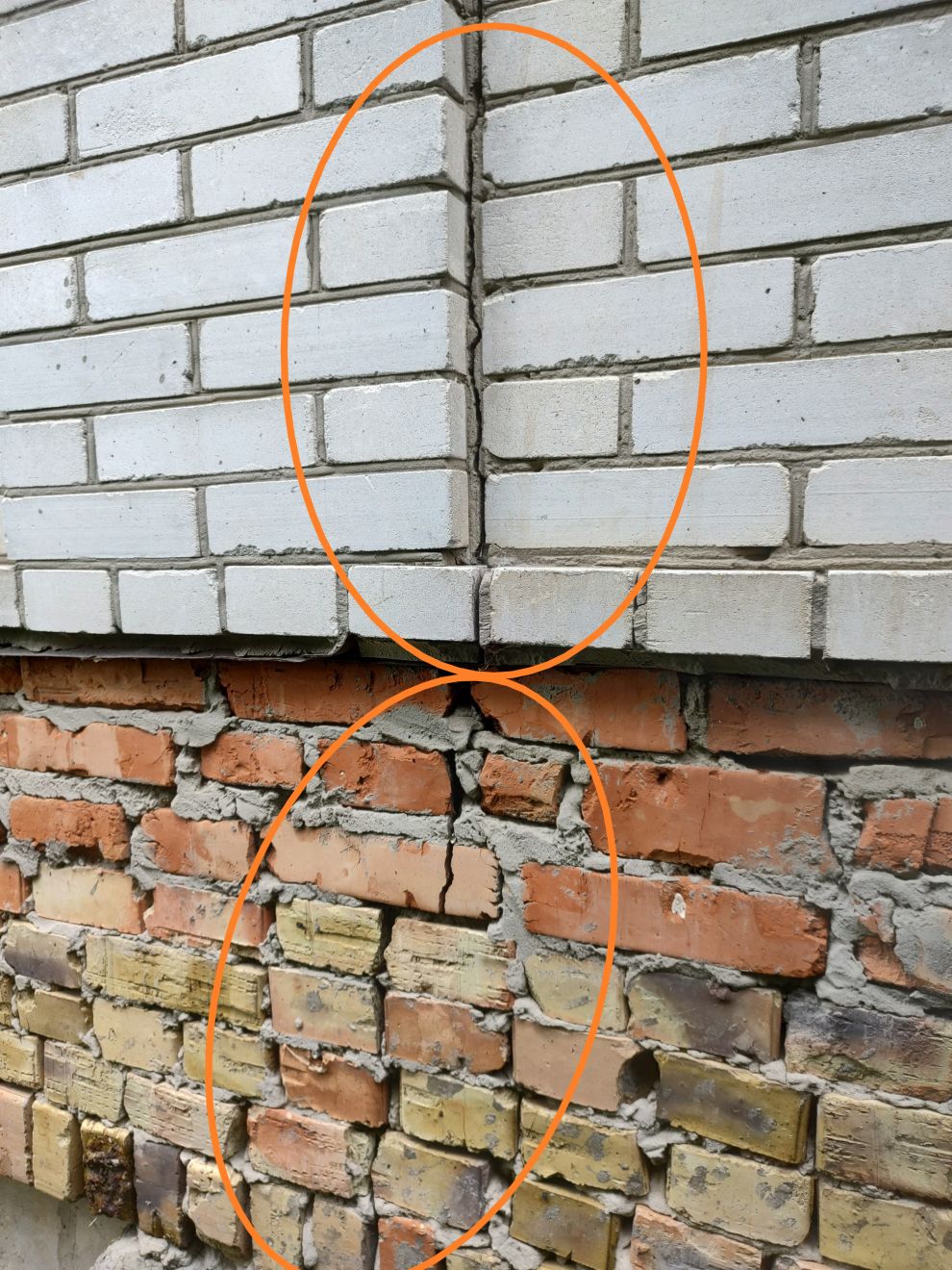
Brick foundations were widely used in the past in the construction of residential houses and small buildings. Such structures could be built entirely of brick or combined with wooden superstructures. Today, construction technologies allow for the creation of more durable, fast-installation foundations capable of supporting heavier structures. As a result, the relevance of brick foundations has significantly declined. At the time when buildings with brick foundations were constructed, waterproofing and geodetic survey technologies were relatively primitive, which is why operational issues often arise today. Over time, such foundations may lose their load-bearing capacity and develop cracks, which can then propagate into the walls of the building.
Causes of cracks in brick foundations
The primary cause of problems is similar for all types of foundations—uneven soil settlement. Over time, the soil may compact, be eroded by groundwater, or change its properties due to seasonal moisture fluctuations. If different parts of the foundation settle unevenly, internal stresses develop, leading to the formation of cracks.
The second cause, more typical for brick and rubble foundations, is the loss of strength of the masonry mortar. Due to moisture exposure and temperature fluctuations over the years, such foundations lose their monolithic integrity and become more vulnerable to deformation under various loads.
The third factor is changing loads. It is important to note that after a building is put into operation, it may undergo modifications—for example, adding extra floors, changing layouts, or constructing extensions. These additional loads were not considered in the original foundation design and often lead to deformation.
Repair of brick foundations using Stati-Cal technologies
This raises an important question: can the building be preserved, given that new construction would involve significantly higher costs?
Yes, it is possible.
The next question is how to repair a brick foundation in the shortest possible time while ensuring reliable results. This can be achieved using a set of Stati-Cal technologies—one of the most modern approaches, combining methods such as Stati-Pile micro-piles and helical reinforcement.
If the damage is caused by subsiding soil, prefabricated steel micro-piles (Stati-Pile) are used. Based on soil investigation results and structural assessment, they can be installed either adjacent to the foundation or directly through it. The pile sections are sequentially extended and driven until the required depth is reached. After installation, the piles are connected to the foundation using steel heads or special support elements. As a result, Stati-Pile transfers the building load to deeper, more stable soil layers, stabilizing the structure.
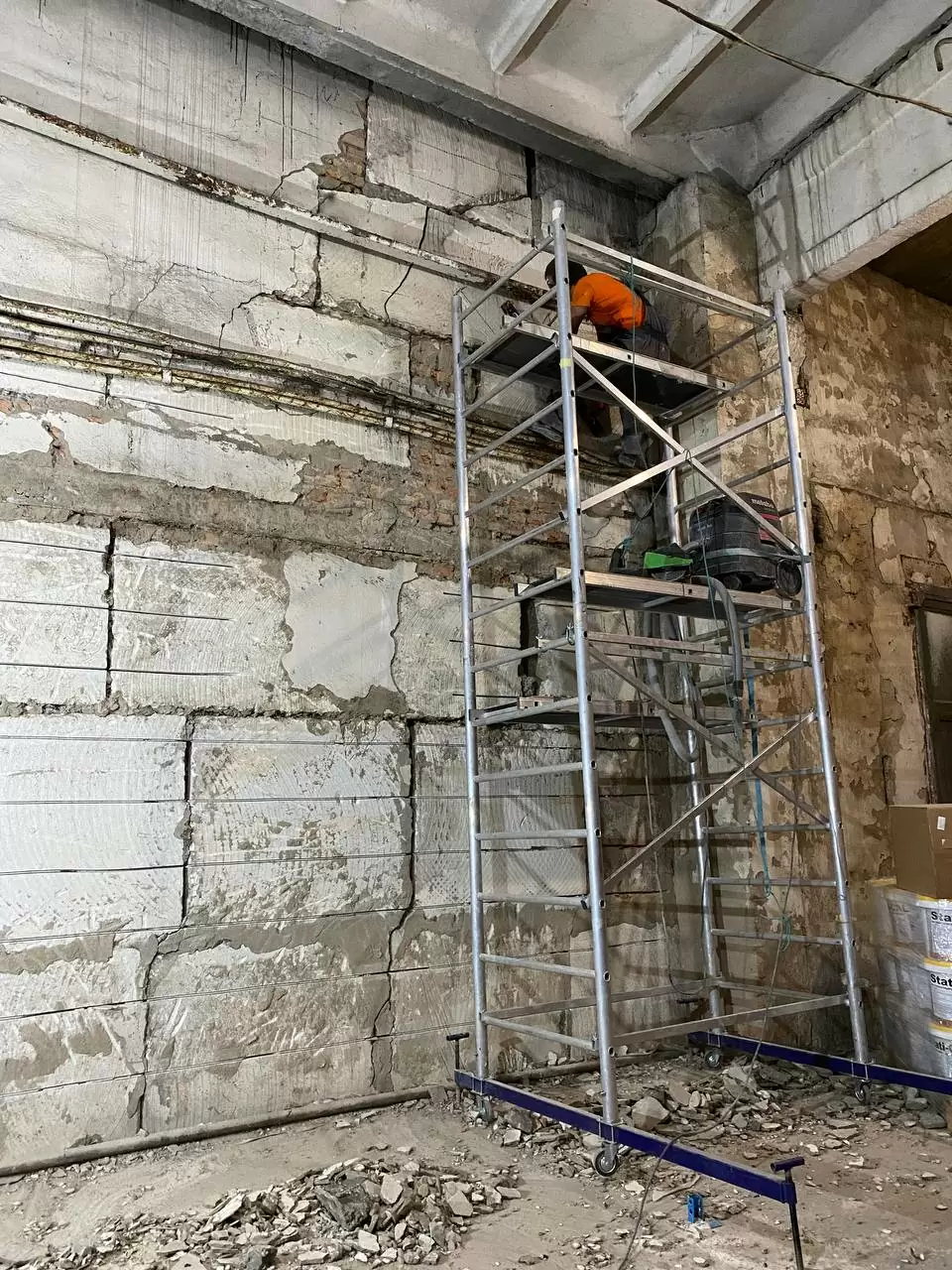
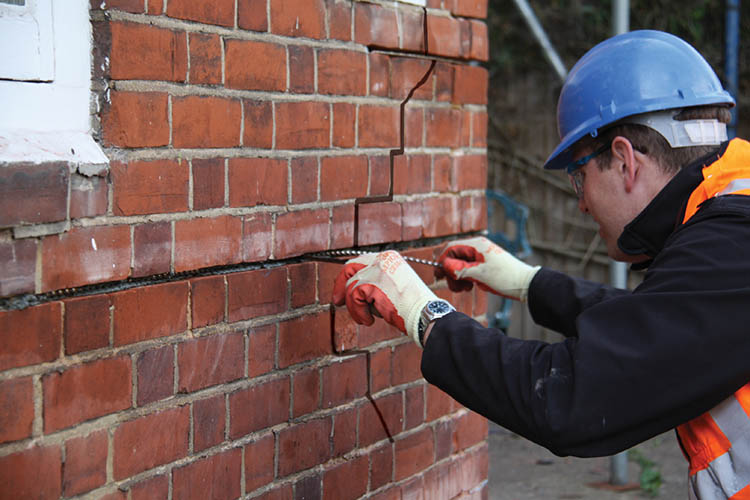
Helical reinforcement is used to restore the strength of brick masonry. In areas with cracks or weakened zones, grooves are cut into horizontal joints. After cleaning, high-strength steel helical bars are installed and fixed with a specialized repair mortar. This solution can also be applied from the inside if access is available from the basement side of the foundation wall.
Helical reinforcement acts as a strengthening element that ties separated sections of masonry together and redistributes stresses. Due to its shape, it bonds effectively with both mortar and brick, forming a durable reinforced connection.
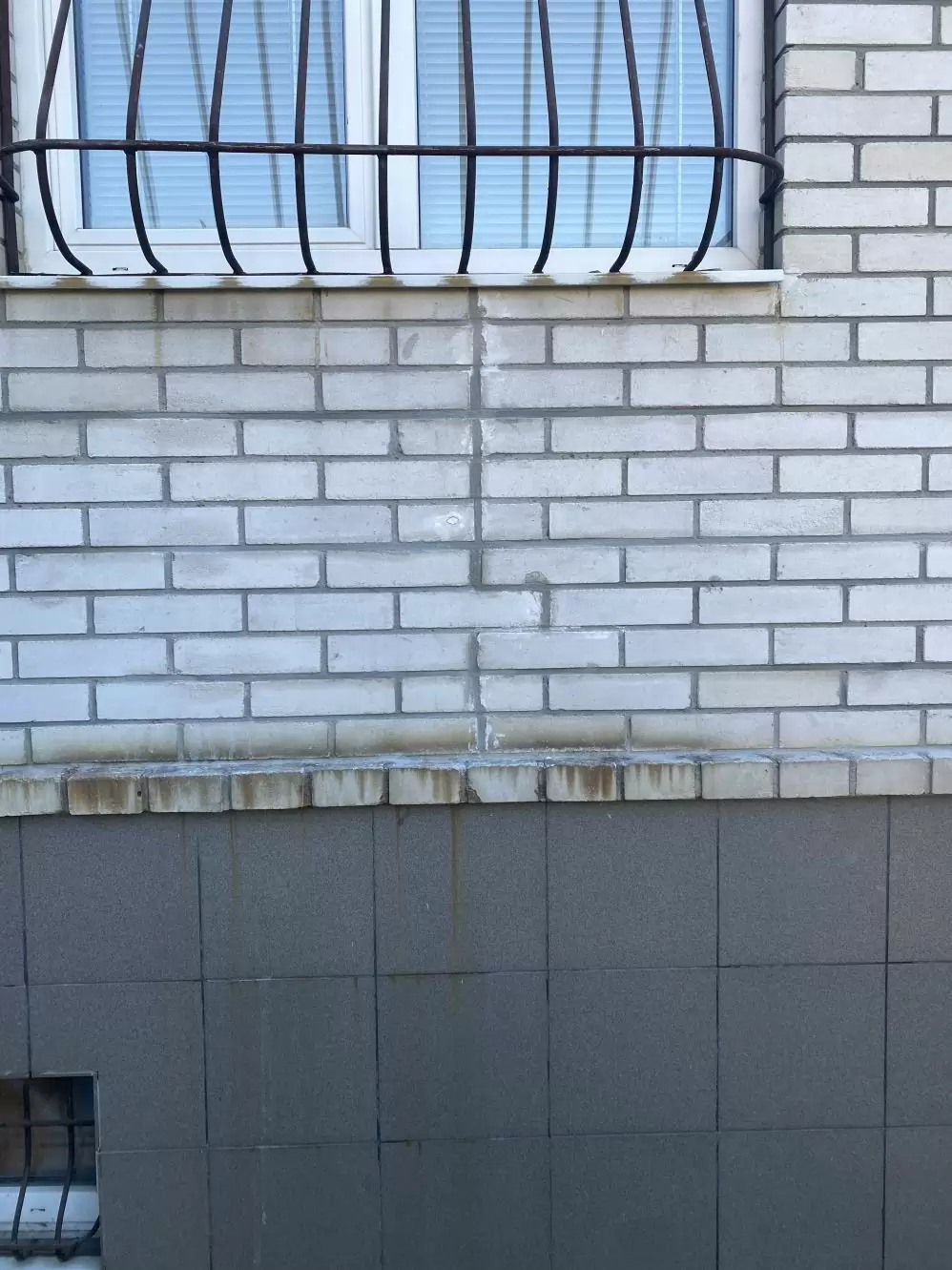
Final result of repair works
This comprehensive solution not only eliminates existing cracks but also addresses several related issues.
Strengthening the masonry prevents further crack propagation and restores the structural rigidity of the building.
The piles eliminate the influence of weak or heterogeneous soils, which is especially important for older buildings constructed without modern geological investigations.
The work is carried out without relocating occupants or dismantling structures.
It is important to understand that the longer foundation and wall cracks are ignored, the more complex the repair process becomes—leading to higher costs and longer timelines. The earlier the issue is addressed, the simpler and faster the solution. A comprehensive approach using Stati-Cal technologies not only eliminates cracks but also significantly improves the durability and reliability of the entire building.
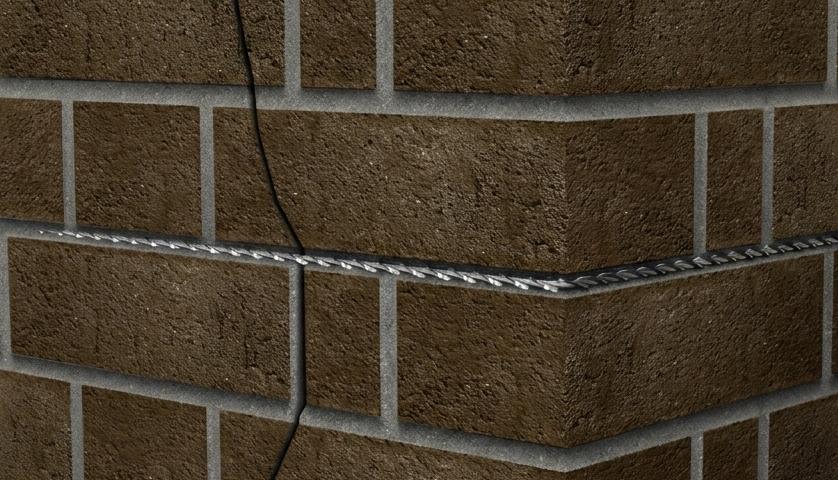

Corners are nodal points that provide spatial rigidity of the entire structure.

Home renovation in rural areas of Ukraine presents special challenges due to historical, economic and social factors. These houses often bear witness to a long and complex history, ranging from the Soviet period to modern changes. The approach to renovating such buildings requires taking into account both the preservation of their historical value and the provision of modern standards of comfort and safety.
Causes of cracks. Cracks in walls can occur for a variety of reasons, including: