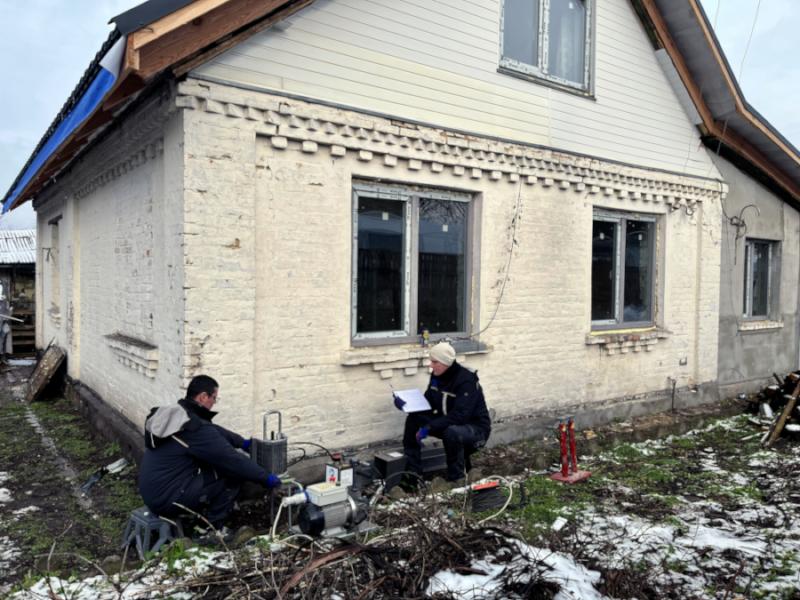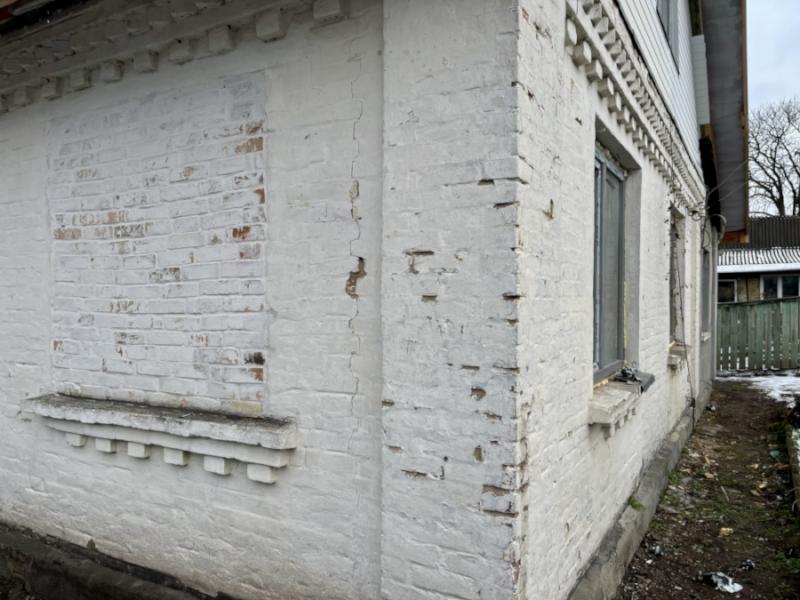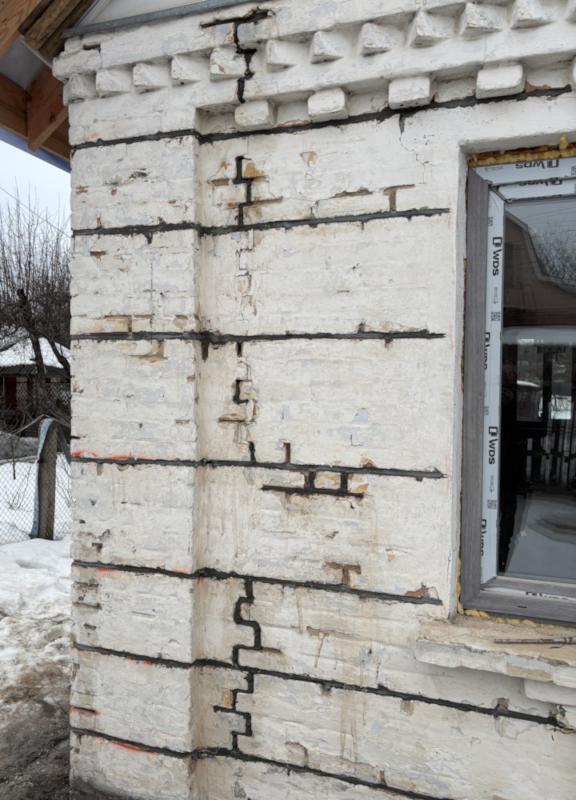
A single-story residential building measuring 10.4 × 9.2 m with an attic floor, no basement.
The structural scheme is frameless, spatial rigidity is provided by longitudinal and transverse load-bearing walls.
Structural elements:
- Foundations – strip, made of rubble stone and brick;
- External walls – brick, well masonry (outer and inner layers with an air layer);
- Partitions – brick and wooden;
- Ceiling – wooden.
At first glance, it looks like a typical private house. But the nature of the cracks and the behavior of the foundations turned out to be atypical.
The challenge of the project: not just cracks, but systematic uneven operation of the foundation.
The owner contacted us before the start of the renovation, noticing the development of cracks in the external walls.
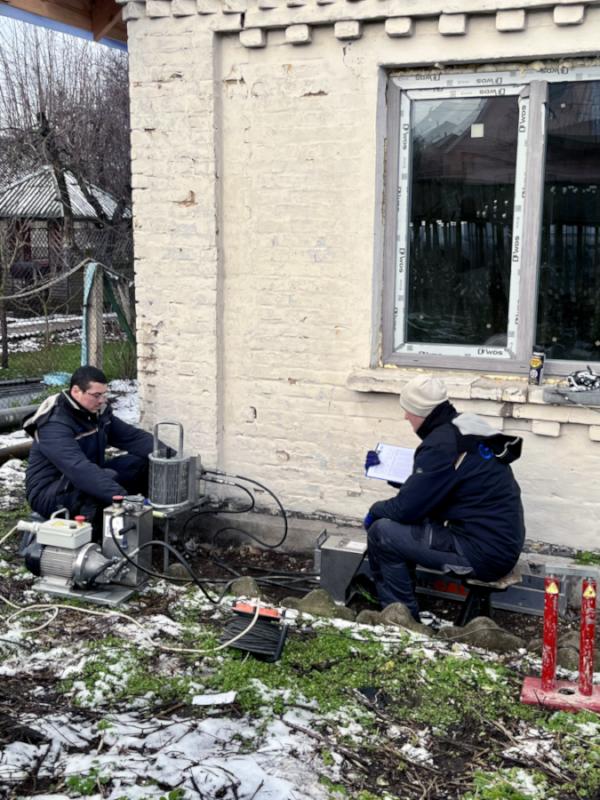
During the inspection (December 2025), engineers recorded:
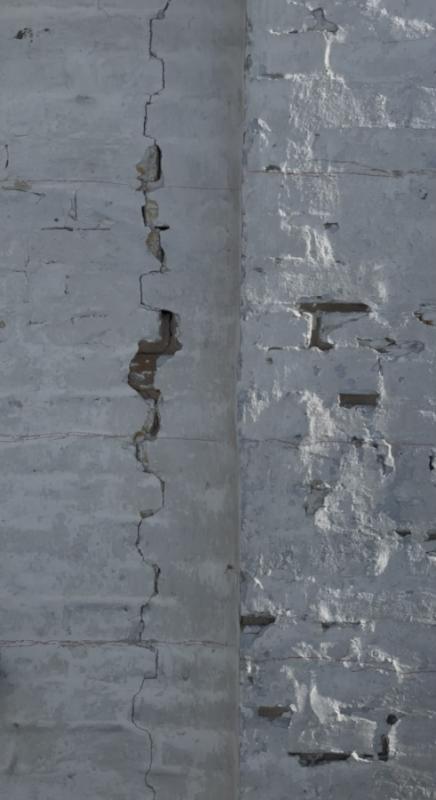
- Cracks in the external walls of different orientation;
- Signs of deformation in the foundation area;
- Variable depth of foundation around the perimeter;
- Different level of the foundation sole in certain areas.
Engineering sounding showed:
- Sandy soils with varying degrees of compaction – from very loose to dense;
- Local zone of high humidity;
- Heterogeneity of the base throughout the entire building area.
Sandy soils are sensitive to changes in humidity. When moistened, they: lose part of their bearing capacity, compact under load, and give additional settlements. When foundations are laid at different depths and rest on heterogeneous layers, differential settlement occurs. In a frameless scheme, this is especially critical – the walls are both load-bearing and stiffening elements. Any skew of the foundation is immediately reflected in cracks in the masonry.
The project is complicated by the fact that:
- Complete replacement or reinforcement of the foundations would require extensive excavation;
- The building was already in use;
- It was necessary to minimize structural intervention and preserve the architecture.
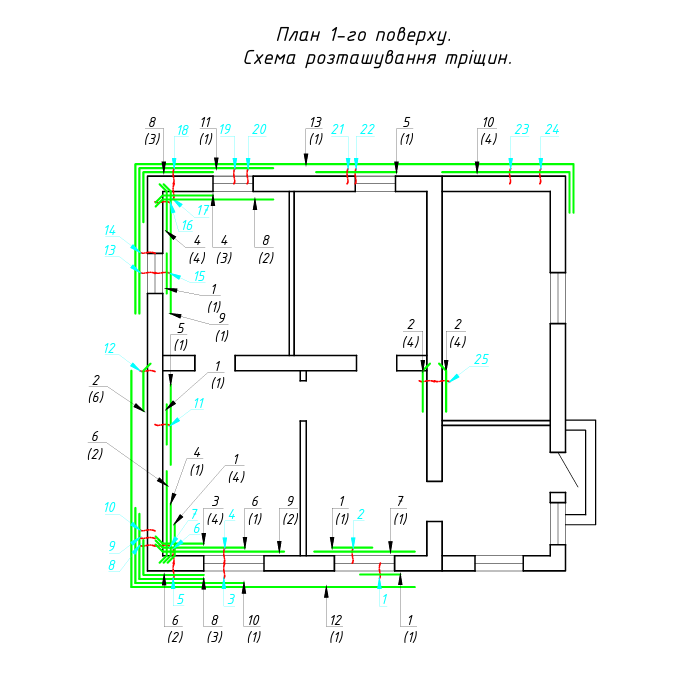
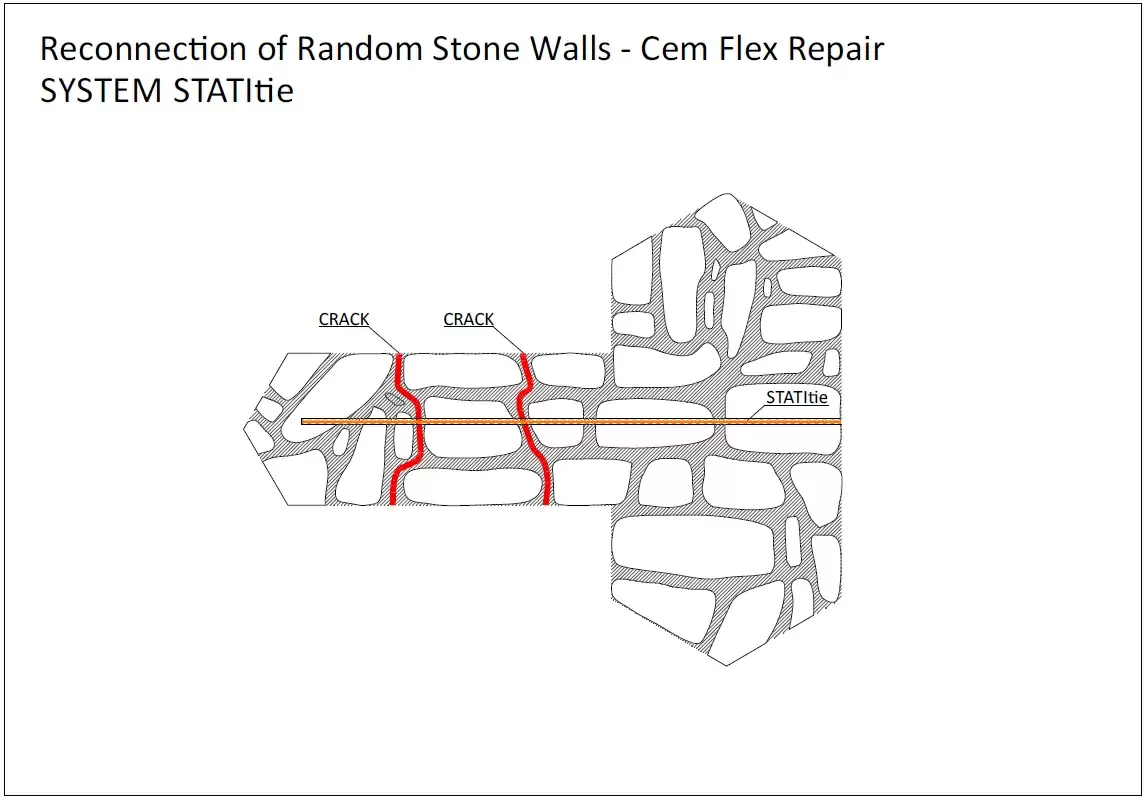
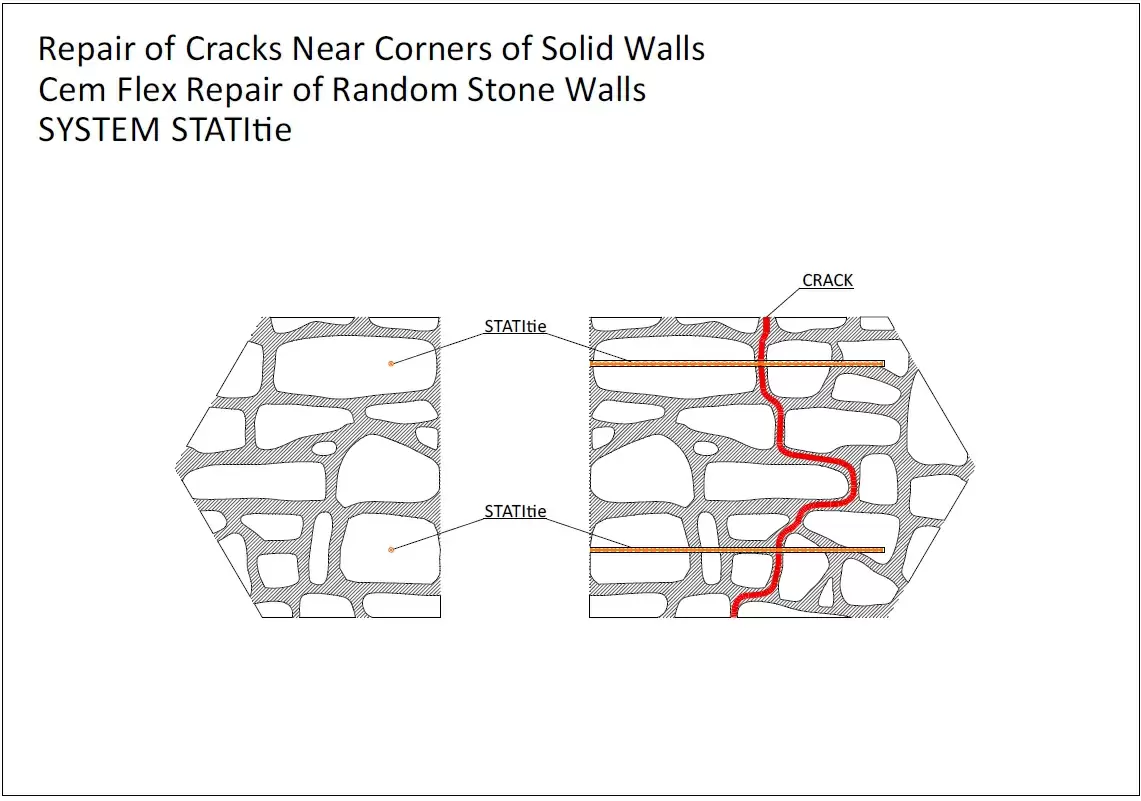
Engineering solution: local stabilization and stress distribution.
After data analysis, a technical solution was developed using the Stati-Cal system.
The principle of the system
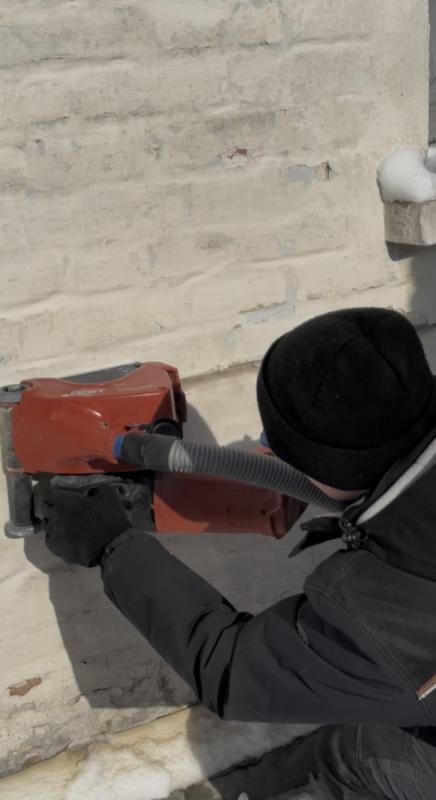
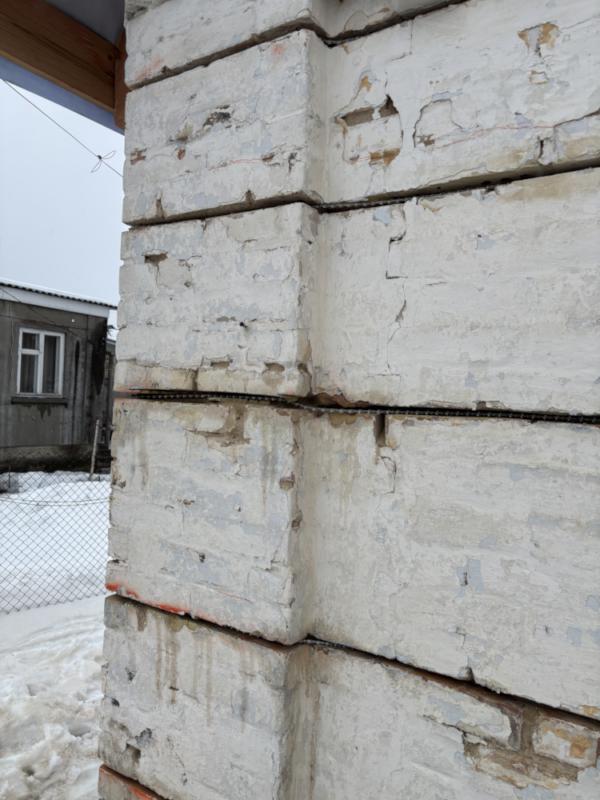
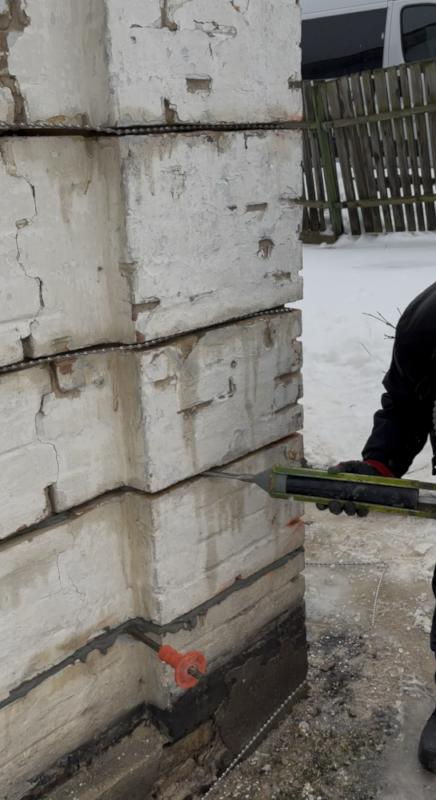
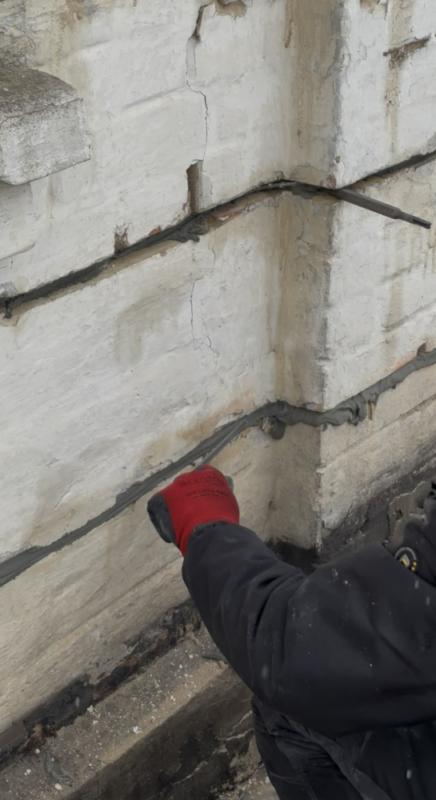
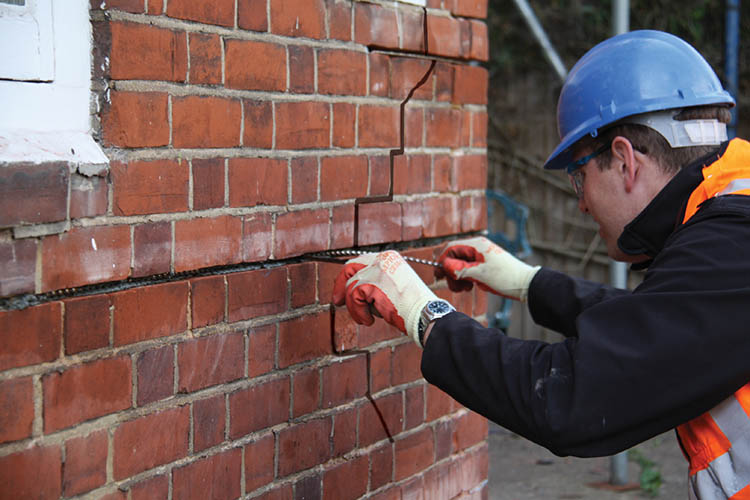
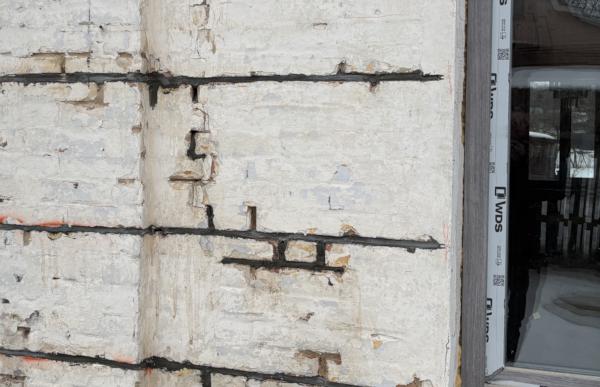
In the crack zone, horizontal joints of the masonry are made of strobes.
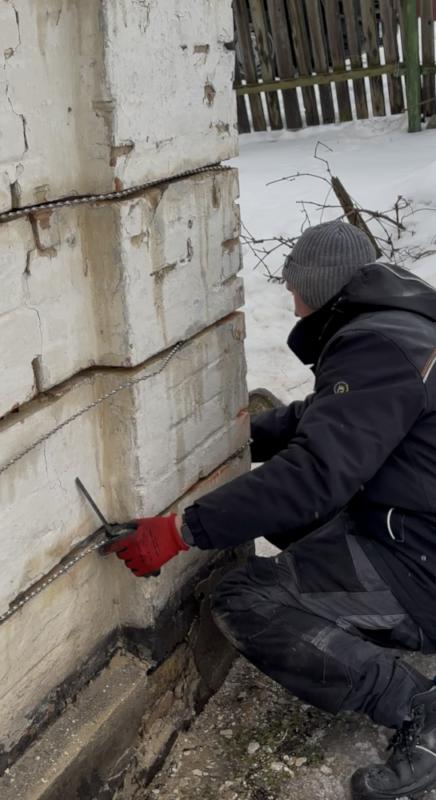
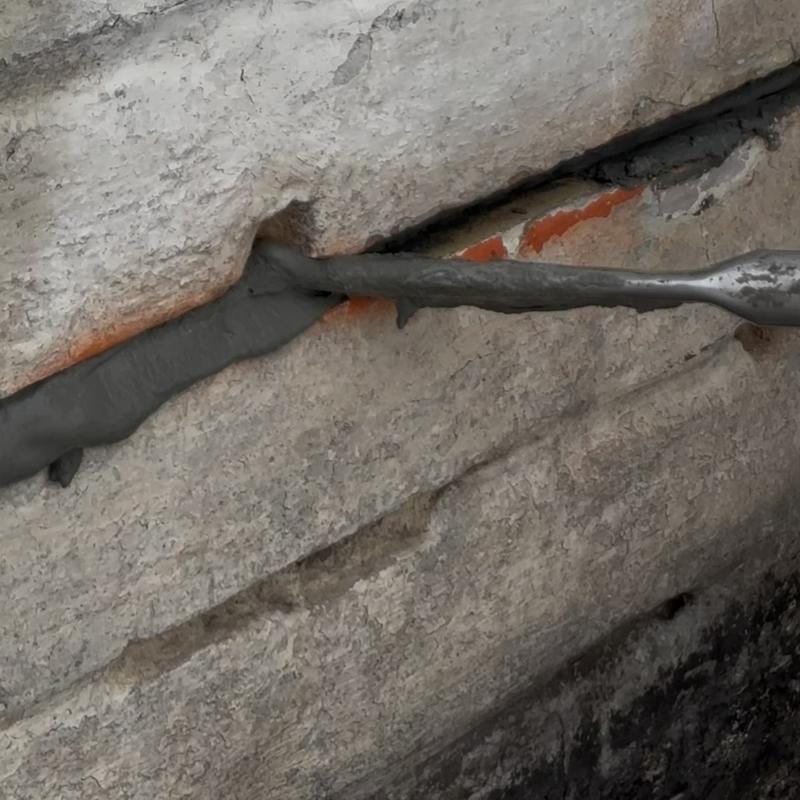
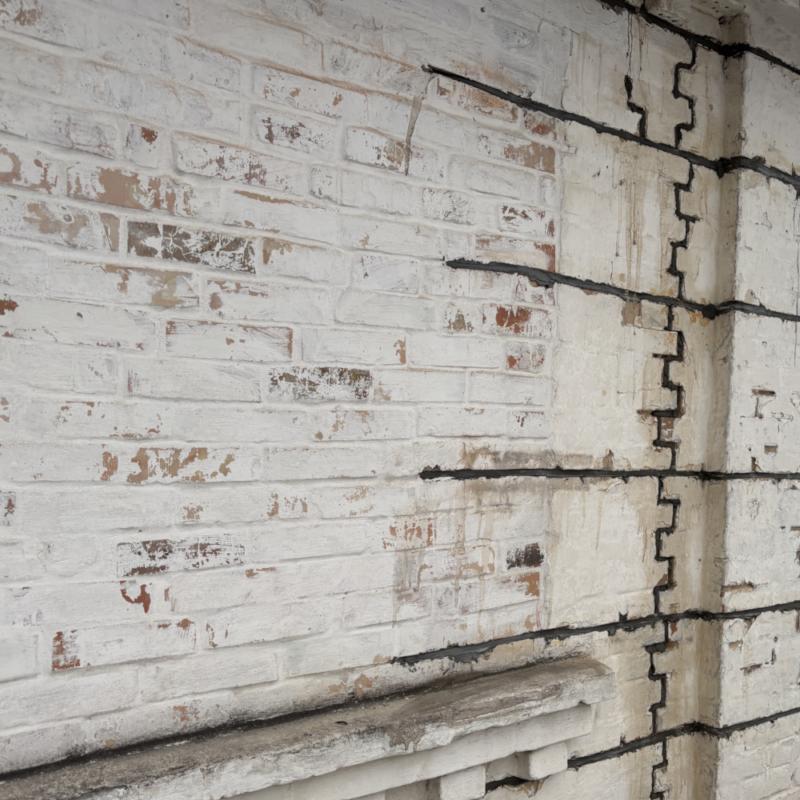
Stati-Bar pre-stressed spiral rods are installed in them, which: work in tension, “stitch” the cracked masonry, redistribute local stresses, and increase the crack resistance of the wall.
Unlike rigid steel plates, spiral rods:
- Have high adhesion to the mortar;
- Work in the “masonry-mortar-reinforcement” system as a composite;
- Allow minor microdeformations without re-opening of cracks.
- In fact, a hidden reinforced belt is created in the plane of the wall, which does not change the appearance of the facade.
Progress of work
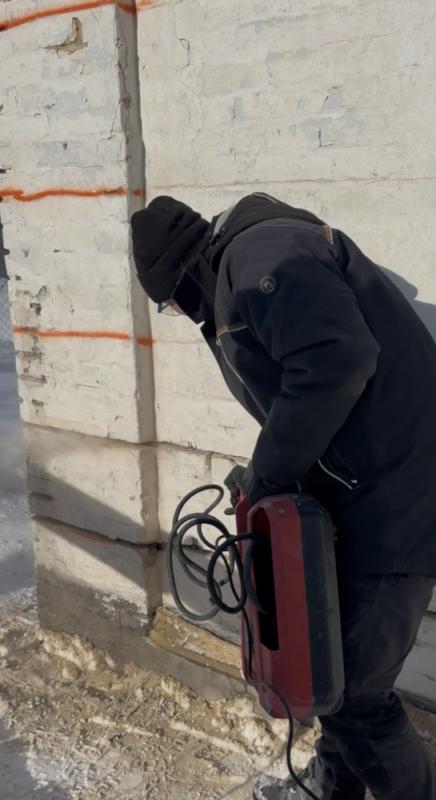
- Marking of sections according to the reinforcement design scheme;
- Cutting of the strobe in the masonry joints with depth control;
- Complete cleaning of the cavities from dust and mortar fragments;
- Filling with a special injection compound;
- Installation of Stati-Bar spiral rods with position and filling control;
- Closing the strobe and restoring the surface.
The full scope of work was completed in 5 calendar days without the relocation of residents and without large-scale dismantling.
Result
- The cracks are stabilized;
- The bearing capacity of the walls in the defect area is increased;
- The stresses are redistributed;
- The building has received the predicted performance of the structures during further operation.
The key is that we didn’t just “mask” the cracks. We eliminated the mechanism for their re-development.
Who should pay attention to this technology?
You can recognize your situation if:
-
- the house has cracks after rain or spring waterlogging;
- the foundation is laid at different depths;
- the building is frameless, with old brickwork;
- the cracks develop gradually, even after cosmetic repairs;
- you are planning a reconstruction or an extension.
- In most cases, the problem can be solved without a complete reconstruction of the foundation, if you conduct engineering diagnostics in time and choose the right solution.
What makes the approach effective?
- Preliminary technical inspection with analysis of causes, not just consequences;
- Design solution adapted to a specific load scheme;
- Technology that minimally interferes with existing structures;
- Short implementation period;
- Comfortable conditions for the owner during work.
A crack in a wall is not a cosmetic defect. It is a signal of a change in the structure’s performance. The earlier the technical analysis is conducted, the cheaper and easier it is to stabilize the building.
Stati-Cal engineered reinforcement technology allows for controlled, predictable results even in challenging conditions with heterogeneous foundations.